

Key Takeaways:
- BPC 157 is a synthetic peptide derived from a protective stomach protein that may accelerate tissue repair by promoting blood vessel formation and collagen synthesis.
- Research suggests it may help with musculoskeletal injuries (tendon, ligament, muscle tears) and gastrointestinal inflammation, though it is not FDA-approved for these uses.
- At Denver Regenerative Medicine, BPC 157 is administered under physician supervision as part of a customized regenerative protocol—never as a standalone “cure.”
- Treatment must be prescribed and monitored by a qualified medical provider; this peptide is not appropriate for self-administration or athletic performance enhancement.
What Is BPC 157 Peptide?
BPC 157 is a synthetic peptide composed of 15 amino acids, derived from a naturally occurring protein found in human gastric juice. The name stands for “Body Protection Compound,” reflecting its original discovery as a stomach-protective agent. Over the past two decades, researchers have explored its potential to support tissue repair beyond the gut—particularly in tendons, ligaments, muscles, and other connective tissues.
Unlike growth hormones or anabolic compounds, BPC 157 does not directly stimulate cell proliferation. Instead, it appears to create an environment conducive to healing by enhancing blood flow to damaged areas and modulating inflammation. This makes it a candidate for integrative treatment protocols in regenerative medicine, especially for patients seeking alternatives to invasive surgery or long-term pain management with pharmaceuticals.
At Denver Regenerative Medicine, we use BPC 157 as part of a broader regenerative strategy—often in combination with platelet-rich plasma (PRP) or stem cell therapy—to give your body the best chance to heal naturally. Dr. Joel Cherdack evaluates every patient individually to determine whether peptide therapy aligns with their specific condition, medical history, and recovery goals.
How Does BPC 157 Work in the Body?
The therapeutic potential of BPC 157 centers on three interconnected biological pathways: angiogenesis, nitric oxide modulation, and collagen organization.
Angiogenesis and Blood Vessel Formation
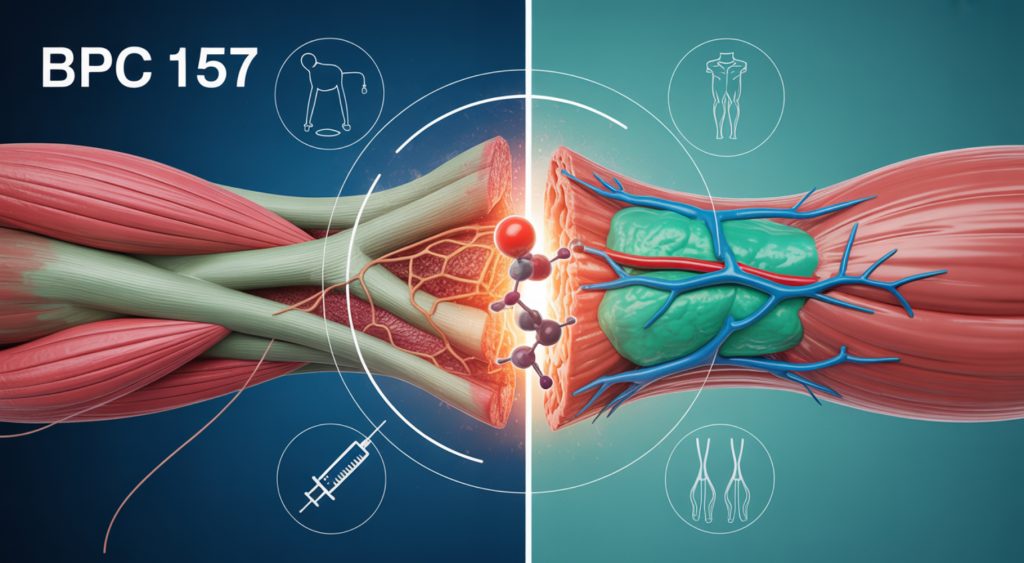
BPC 157 has been shown in animal studies to promote angiogenesis—the formation of new blood vessels—in injured tissue. More blood flow means more oxygen, nutrients, and immune cells reaching the site of damage. This is particularly relevant for tendons and ligaments, which are naturally low in blood supply and heal slowly. By upregulating vascular endothelial growth factor (VEGF) signaling, BPC 157 may help “turn on” the body’s repair mechanisms in areas that would otherwise remain stagnant.
Nitric Oxide Pathway and Vasodilation
The peptide interacts with the nitric oxide (NO) system, a critical regulator of vascular tone and endothelial health. By supporting NO production, BPC 157 may improve vasodilation—widening blood vessels to enhance circulation. This effect extends beyond injury sites; some researchers believe it contributes to systemic anti-inflammatory benefits and even cardiovascular protection, though human clinical data remains limited.
Collagen Synthesis and Fibroblast Activity
BPC 157 appears to influence fibroblasts—the cells responsible for producing collagen, the structural protein in tendons, ligaments, and skin. Early research suggests the peptide may upregulate growth hormone receptors on these cells, accelerating collagen deposition and improving the tensile strength of healing tissue. The result: a stronger repair with less residual scar tissue and loss of function.
It’s important to note that most mechanistic data comes from animal models (rats, rabbits) and in vitro studies. While promising, these findings have not yet been replicated in large-scale human trials. At our clinic, we position BPC 157 as an adjunctive therapy—part of a protocol-driven approach, not a standalone miracle cure.
What Conditions Can BPC 157 Help Treat?
BPC 157 is being explored for a range of inflammatory and degenerative conditions. Below are the most common applications we see in clinical practice.
Musculoskeletal Injuries
Tendinopathy and Ligament Damage
Chronic tendon issues—like tennis elbow, Achilles tendinopathy, or rotator cuff tears—are notoriously difficult to treat. Physical therapy helps, but recovery can take months. BPC 157 may shorten that timeline by supporting collagen remodeling and reducing inflammation at the injury site. We often combine it with PRP injections for a synergistic effect: the platelets deliver growth factors, while BPC 157 enhances the vascular response.

Muscle Tears and Strains
Acute muscle injuries (hamstring pulls, hip flexor strains) typically heal in 6–8 weeks. Emerging evidence suggests BPC 157 may accelerate this process by improving microcirculation and reducing fibrosis—the formation of rigid scar tissue that limits mobility. Athletes recovering from grade 2 or 3 strains are among the most interested in this therapy, though we emphasize that peptide use for performance enhancement is prohibited by WADA and USADA.
Post-Surgical Recovery
After orthopedic surgery (ACL reconstruction, meniscus repair), the body must rebuild damaged tissue while managing surgical trauma. BPC 157 may support this dual challenge by promoting angiogenesis in the surgical site and protecting against excessive inflammation. Dr. Cherdack has used it as part of post-op protocols for patients who want to optimize their recovery trajectory without relying solely on NSAIDs or opioids.
Gut Health and Inflammation
Inflammatory Bowel Conditions
BPC 157 was originally studied for its cytoprotective effects on the gastrointestinal lining. Research in animal models shows it may help heal ulcers, reduce inflammation in colitis, and restore the integrity of the intestinal barrier (often called “leaky gut”). While human data is sparse, some integrative medicine providers use it off-label for patients with IBS, IBD, or chronic gastritis who have not responded to conventional therapies.
Systemic Anti-Inflammatory Effects
Because BPC 157 modulates the gut-brain axis and influences systemic cytokine production, it may offer benefits beyond localized injury sites. Patients with chronic, low-grade inflammation—often linked to autoimmune conditions or metabolic syndrome—sometimes report improved energy and reduced pain after a course of peptide therapy. These effects are anecdotal and require further study.
How Is BPC 157 Administered?
BPC 157 is stable in gastric acid, which means it can theoretically be taken orally. However, most clinical applications use injectable forms to ensure precise dosing and targeted delivery.
Subcutaneous Injection (Systemic)
For systemic effects—such as gut healing or widespread inflammation—BPC 157 is injected subcutaneously, typically in the abdomen or thigh. This allows the peptide to enter the bloodstream and circulate throughout the body. Dosing protocols vary, but a common regimen is 250–500 mcg once or twice daily for 4–6 weeks.
Local Injection (Site-Specific)
For musculoskeletal injuries, we may inject BPC 157 directly into or near the affected tissue (e.g., around a damaged tendon or ligament). This approach maximizes local concentration while minimizing systemic exposure. It’s often combined with PRP or stem cell injections as part of our acCELLerate™ protocol.
Oral Administration
Some compounding pharmacies offer oral BPC 157 in capsule or liquid form, typically as an arginate or acetate salt to enhance stability. While convenient, oral bioavailability is less predictable than injection. We reserve this route for patients with gastrointestinal conditions or those who cannot tolerate injections.
Dosage Cycling and Timing
Peptide therapy is not meant to be continuous. Most protocols run 4–8 weeks, followed by a rest period to allow the body to integrate the healing response. Dr. Cherdack tailors the cycle length based on the severity of the injury, patient response, and whether BPC 157 is being used alongside other regenerative modalities.
Is BPC 157 Safe? What Does the Research Say?
BPC 157 is not FDA-approved for any medical indication. It exists in a regulatory gray zone: it can be compounded by licensed pharmacies for research or off-label use, but it is not available as a prescription drug through standard channels.
Current Regulatory Status
As of 2024, the FDA has classified BPC 157 as a “Category 2” substance under its compounding guidance, meaning it cannot be marketed as a bulk drug for human use without an approved New Drug Application (NDA). This does not make it illegal, but it does limit how it can be prescribed and dispensed. At Denver Regenerative Medicine, we source BPC 157 only from accredited compounding pharmacies that conduct third-party purity testing (HPLC analysis) to ensure the peptide is free of contaminants.
Safety Profile and Side Effects
Animal studies suggest BPC 157 has a favorable safety profile, with minimal toxicity even at high doses. Human case reports are limited, but the most commonly reported side effects are mild and transient:
- Injection site irritation or redness
- Temporary fatigue or headache
- Mild gastrointestinal upset (with oral forms)
There is no evidence of hormonal disruption, liver toxicity, or cardiovascular risk in the existing literature. However, long-term human data does not exist. We do not recommend BPC 157 for pregnant or breastfeeding women, or for patients with active cancer (due to its pro-angiogenic effects).
The Angiogenesis Concern
Because BPC 157 promotes blood vessel formation, some researchers have raised theoretical concerns about its use in cancer patients. Tumors rely on angiogenesis to grow and metastasize. While there is no evidence that BPC 157 causes or accelerates cancer, we apply a precautionary principle: if you have a history of malignancy, we will not prescribe this peptide without clearance from your oncologist.
WADA/USADA Status
BPC 157 is prohibited by the World Anti-Doping Agency (WADA) for competitive athletes. If you are subject to drug testing in any sport, you should not use this peptide. We do not prescribe it for performance enhancement—only for legitimate injury recovery under medical supervision.
Who Is a Good Candidate for BPC 157 Therapy?
BPC 157 is not a first-line treatment. We consider it for patients who meet specific criteria:
- Chronic or slow-healing injuries that have not responded adequately to physical therapy, rest, or conventional treatments
- Post-surgical patients seeking to optimize tissue repair and reduce recovery time
- Individuals with gastrointestinal inflammation (IBS, IBD, ulcers) who have exhausted standard medical options
- Patients committed to a comprehensive regenerative protocol, including nutrition, rehabilitation, and follow-up care
Who Should NOT Use BPC 157:
- Pregnant or breastfeeding women
- Patients with active or recent cancer (within 5 years)
- Competitive athletes subject to WADA/USADA testing
- Individuals seeking a “quick fix” without addressing underlying lifestyle or biomechanical factors
At Denver Regenerative Medicine, we believe in treating the whole person, not just the injury. BPC 157 is one tool in a larger toolkit. Dr. Cherdack will assess your medical history, current medications, and treatment goals to determine whether peptide therapy is appropriate—and if so, how to integrate it into a customized regenerative plan.
What to Expect at Denver Regenerative Medicine
Your First Consultation
We start with a comprehensive evaluation. Dr. Cherdack will review your injury history, imaging studies (MRI, X-ray, ultrasound), and any prior treatments. We’ll discuss your goals: Are you trying to avoid surgery? Return to a specific sport or activity? Manage chronic pain? This conversation shapes the treatment protocol.
The Treatment Protocol
If BPC 157 is recommended, we’ll outline the dosing schedule, injection frequency, and expected timeline. Most patients begin to notice improvements within 2–4 weeks, with benefits continuing to develop over 8–12 weeks. We often combine BPC 157 with:
- Platelet-Rich Plasma (PRP): Your own platelets deliver growth factors directly to the injury site.
- Stem Cell Therapy (acCELLerate™): Adipose- or bone marrow-derived stem cells provide a powerful regenerative synergy.
- Rehabilitation: Physical therapy, mobility work, and corrective exercises to address the root cause of the injury.
Monitoring and Follow-Up
Regenerative medicine is not “one and done.” We schedule follow-up appointments to track your progress, adjust the protocol if needed, and ensure you’re healing safely. If you experience any unusual symptoms, we address them immediately.
Our Philosophy: Do No Harm
We’re not here to sell you a treatment you don’t need. If your condition is better suited to physical therapy, rest, or even surgery, we’ll tell you. Our goal is to help you avoid unnecessary procedures and regain function—naturally, without going under the knife unless absolutely necessary.
Frequently Asked Questions About BPC 157
How long does a typical BPC 157 cycle last for tendonitis?
Most protocols run 4–6 weeks, with injections administered daily or every other day. Some patients extend to 8 weeks for stubborn injuries. We always include a rest period after the cycle to allow the body to consolidate the healing response.
Is BPC 157 bioavailable when taken orally for systemic injuries?
BPC 157 is stable in gastric acid, which suggests oral bioavailability. However, injectable forms are more predictable for musculoskeletal injuries. We use oral BPC 157 primarily for gastrointestinal conditions.
Can BPC 157 cause an increase in blood pressure or heart rate?
There is no evidence of cardiovascular side effects in animal studies or human case reports. Its effects on the nitric oxide system may actually support healthy blood pressure regulation, though this has not been rigorously tested.
Does BPC 157 show up on standard athletic drug panels?
BPC 157 is not typically included in routine drug screens, but it is prohibited by WADA. If you are a tested athlete, assume it will be detected if your organization uses advanced peptide panels.
How does BPC 157 differ from TB-500 for tissue repair?
TB-500 (Thymosin Beta-4) promotes cell migration and differentiation, while BPC 157 focuses on angiogenesis and inflammation modulation. They are often stacked together for synergistic effects, though this increases cost and complexity.
What are the current FDA regulations regarding compounding BPC 157?
BPC 157 is classified as Category 2 under FDA compounding guidelines. It can be compounded by licensed pharmacies for individual patient use but cannot be mass-produced or marketed as a drug. We source only from accredited facilities with third-party testing.
Is there any risk of cancer from BPC 157’s pro-angiogenic effects?
There is no evidence linking BPC 157 to cancer development. However, because tumors rely on angiogenesis, we do not prescribe it to patients with active malignancy or recent cancer history without oncologist clearance.
What To Do Next: Start Your Regenerative Journey
If you’re dealing with a chronic injury, slow recovery, or persistent inflammation that’s limiting your life, it’s time to explore a different approach. At Denver Regenerative Medicine, we don’t just treat symptoms—we help your body heal itself using cutting-edge regenerative therapies like BPC 157, PRP, and stem cell treatments.
Schedule your free consultation with Dr. Joel Cherdack today. We’ll review your case, answer your questions, and create a personalized protocol designed to get you back to the activities you love—without surgery, without long-term medications, and without unnecessary downtime.
Call our Denver clinic or visit our website to book your appointment. We offer flexible financing options through CareCredit and AdvanceCare to make treatment accessible.
Don’t let pain or injury define your future. Let’s build a regenerative solution together.
 What Are GLP-1 Medications and Why Are People Buying Them Online?
